
The early years of padel
The origins of padel
Padel is still a young sport that is on the rise in the Netherlands. In South America and Southern Europe the sport is already a lot more popular and the history is richer. Who invented Padel, where did padel originate and what is it based on?
The History of Padel
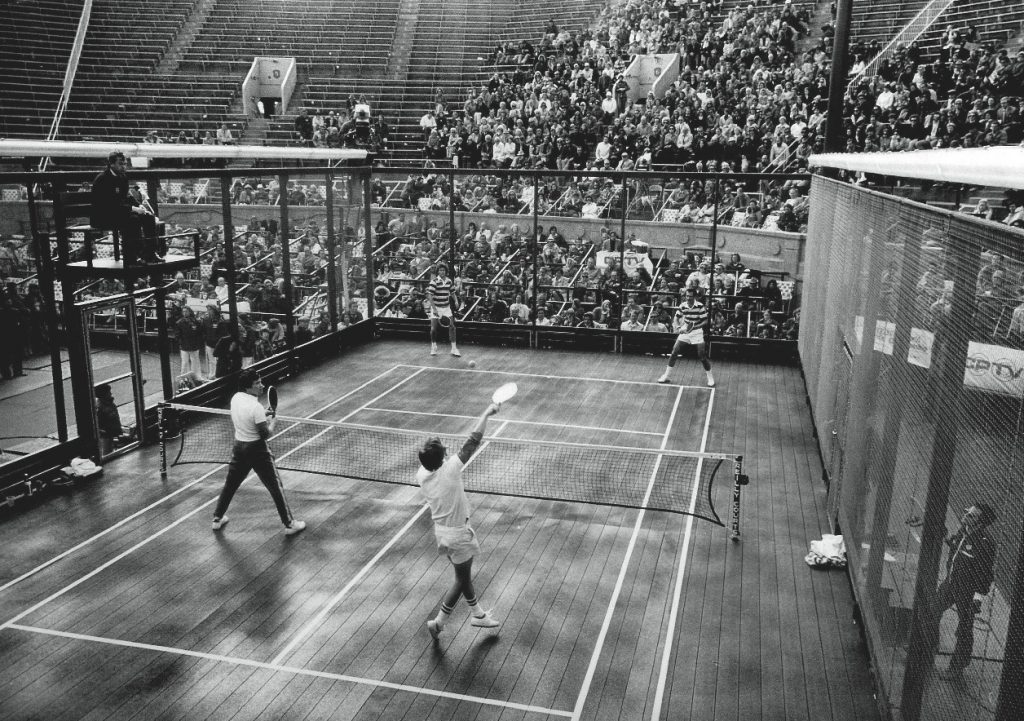
There are a number of versions of the origins of Padel in circulation. For example, Frank Beal, an American, is said to be the founder of Padel with his Paddle tennis that he invented in 1898. His version was played on a 1/4 tennis court. However, this cannot be compared to Padel as we know it today. It was also not possible to use walls. To trace the origins of Padel as we know it today, we go back to 1969. In Acapulco, Mexico, Enrique Corcuera was the first to build a Padel court with the dimensions we know today. However, this was not initially the intention. Enrique Corcuera actually wanted a tennis court, but due to lack of space he invented his own game.
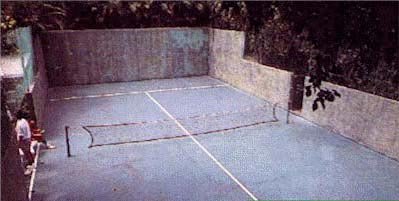
Because the court was a lot smaller, Enrique Corcuera decided that it would be better not to play with regular tennis rackets, but with smaller wooden rackets. Over the years this has been adapted to the rackets as we know them today. Initially, Padel was only played by the Mexican elite.
Padel worldwide
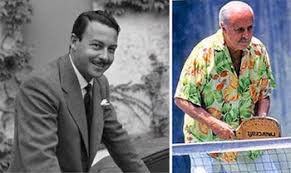
Alfonso De Hohenlohe has had a major influence in the globalization of Padel. Mr Hohenlohe was a friend of Enrique Corcuera and thus came into contact with Padel, the sport he would take with him to Spain. In 1974, the first European Padel club was founded in Marbella. In Spain too, mainly the elite played the game. However, the sport drastically gained popularity due to the promotion of public figures such as King Juan Carlos & Manolo Santana (former Wimbledon winner). There was a great demand for more Padel clubs. Padel is currently the largest sport after football with 5,000,000 athletes. In 1992, Seville was the city where the first Padel World Championship took place. A tournament where 11 countries were represented.
After Spain, Argentina was the next nation where Padel gained popularity. Julio Menditengui, a friend of Alfonso de Hohenlohe, brought Padel to Argentina. Here too it was a great success. In 2000, France was also added to this list, with newly constructed courses in Toulouse.
After years of growth, an equivalent of the ATP & WTA (Worldwide Tennis Associations) was inevitable. The World Padel Series was created in 2013. A series of tournaments worldwide. About 15-20 tournaments take place every year, with a Masters Series at the end of the season, for which only the best players qualify.
The origins of Padel in the Netherlands
The origins of Padel went unnoticed in the Netherlands for a long time. In the Netherlands, Padel first received national attention through Guus Hiddink. The then coach of PSV Eindhoven accommodated his South American players by adding a padel court to the training facilities with the simple aim of having fun. In addition, the sport is suitable as a run-out training for football players.
Since 2010, the Netherlands officially had a Dutch Padel Association. This association ensures that the Netherlands adopts Padel at a rapid pace. The association has been a member of the international padel federation since 2013. In 2014, the ranking was implemented and the Dutch men qualified for the World Cup for the first time. In 2015, a European Championship was held in the Netherlands for the first time. Because Padel has many similarities with tennis, and many tennis clubs have decided to also build padel courts, this association has been working with the KNLTB since 2016. Since then, the association has even merged with the KNLTB and therefore no longer exists independently. The competition started for the first time in 2017 and a National Championship was also organized for the first time.
In 2015, the Netherlands had 24 locations where the sport could be played. In 2016 and 2017, the number of locations where Padel can be played in the Netherlands doubled. At the time of writing, there are approximately 117 locations where Padel can be played.